September 26, 2026 – March 28, 2027
This fall, Museum Gouda will tell a unique and little-known story about the largest, most valuable, and most prestigious works of art from the 16th and 17th centuries: tapestries. Recent research shows that for nearly two centuries, Gouda was the center of tapestry art in the Northern Netherlands. These tapestries still adorn the walls of castles and palaces around the world. For example, in 2025, during their state visit to Sweden, King Willem-Alexander and Queen Máxima stood in front of a series of life-size tapestries made in Gouda. Wonder Walls is the first major exhibition in the Netherlands dedicated to this rich art form. Through monumental loans from the Netherlands and abroad, Museum Gouda tells stories of migration, cultural exchange, the spirit of trade, and female entrepreneurship, as well as of status, luxury, and their flip sides.
The Untold Story Behind Europe’s Most Luxurious Art Forms
What migration can bring to a city. In the late 16th century, Gouda welcomed refugees from Flanders and received in return masterpieces that would spread throughout Europe. At that time, tapestries were the most prestigious art form in existence. Due to their monumental size, precious materials, and labor-intensive production, they were considered status symbols of the highest order. Monarchs and nobles used them not only to adorn and insulate palaces and castles, but also as diplomatic gifts and impressive decor at official receptions.
Tapestries are the ultimate luxury product—for example, the Raphael tapestries for the Sistine Chapel are five times more expensive than Michelangelo’s ceiling. And King Henry VIII of England commissioned tapestry sets that cost as much as a fully equipped warship. Wonder Walls also demonstrates why tapestries are so special: they combine artistic richness with mobility. Unlike murals, they can be rolled up and transported, allowing spaces to be transformed into richly decorated halls in a short time. Because of this, tapestries are also known as the “mobile frescoes of the North.”
Women Entrepreneurs
The exhibition *Wonder Walls* is based on research conducted by Dr. Rudy Jos Beerens of the RKD—Netherlands Institute for Art History. He has documented how Flemish tapestry weavers, arriving as refugees from the end of the 16th century onward, managed—thanks to social networks and commercial strategies—to bring the art of tapestry to new heights in Gouda. As part of his research, Beerens also examined the role of women in the tapestry industry and reached some surprising conclusions. “Wonder Walls” thus reveals stories of migration, exchange, and creative entrepreneurship among both men and women.
National and international loans
Important loans for this exhibition come from Sweden and France, among other places, as well as from Dutch collections. Tapestries from the impressive Skokloster Castle near Stockholm are returning to the Netherlands for the first time in centuries. The Rijksmuseum in Amsterdam is lending the tapestry *Orestes’ Revenge on Aegisthus* (ca. 1650). It was made in the workshop of Pieter de Cracht—highly regarded at the time—the son-in-law of the Oudenaarde weaver Jacques Nauwincx, who settled in Gouda in 1591. The tapestry is part of a popular and rare series of five works based on the classical stories of Orestes and Iphigenia.
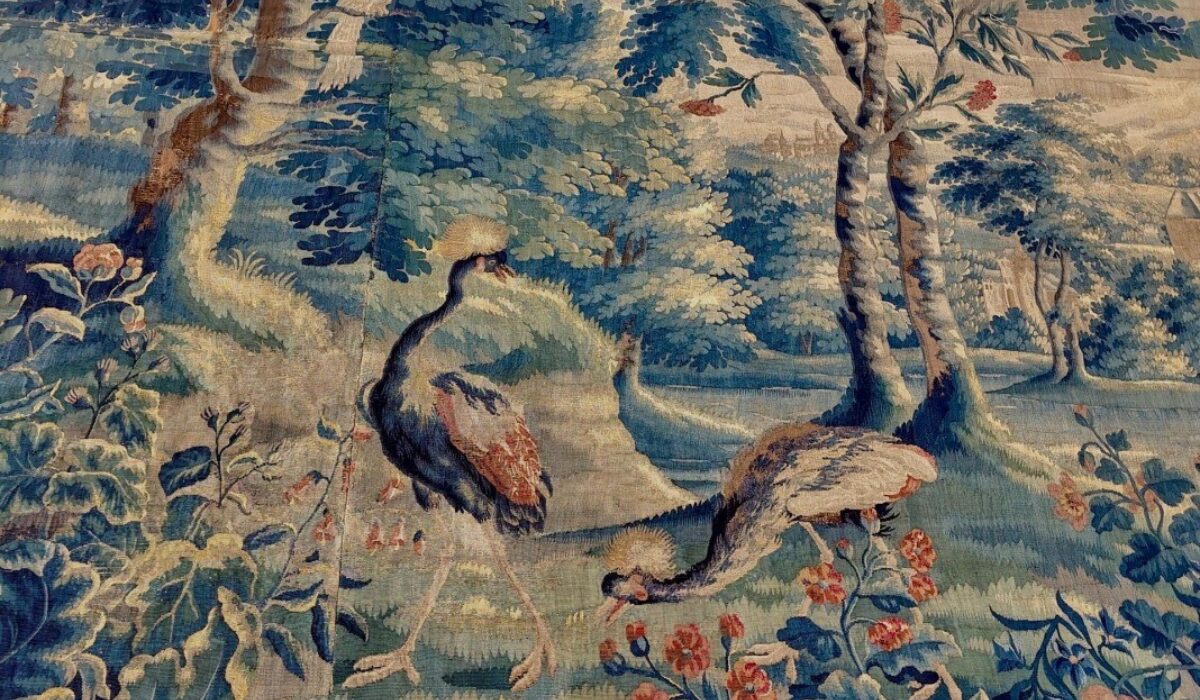
The city council of Gouda purchased the first pieces for City Hall as early as the late 16th century. The exhibition also features a monumental tapestry that has hung in Gouda’s city hall ever since. To this day, the landscape tapestry—over ten meters long—serves as the permanent backdrop for many weddings in Gouda. This year, the city hall is undergoing a major renovation, and this beloved tapestry is also being restored. As a very special exception, it is coming to Museum Gouda, after which it will return to its familiar spot for centuries to come.
A Journey of Discovery
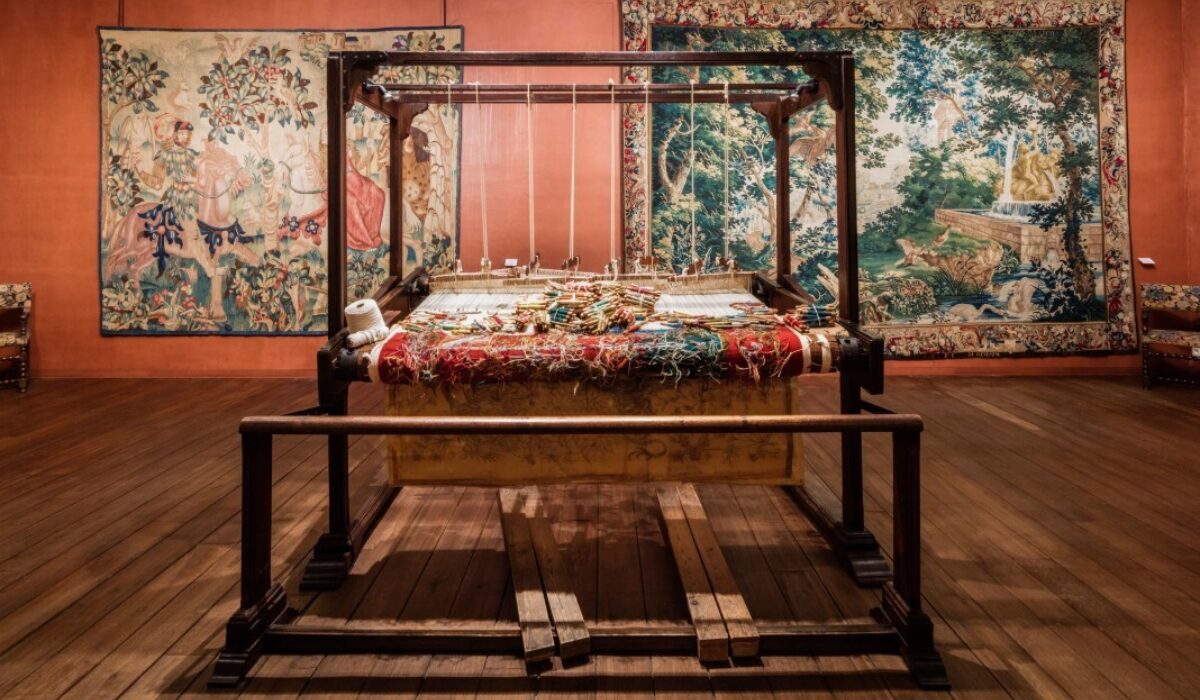
In this exhibition, visitors literally step into another world. Within an overwhelming green landscape of deciduous trees, flowers, and birds, an environment full of details, vistas, and surprises unfolds. What at first appears to be a forest turns out, upon closer inspection, to be a richly decorated room. This experience serves as the starting point for a journey of discovery exploring the most important artists, their techniques and stories, and the international significance of tapestry art. Tapestry murals several meters high from collections in the Netherlands and abroad transform the museum walls into “wonder walls.” Behind the tapestries lies a world whose existence was virtually unknown until now. The exhibition answers questions such as: Who made these tapestries, how were they produced, and why did Gouda, in particular, play such an important role in this?
Gouda as an international center of tapestry art
Starting in the 1580s, Gouda rapidly emerged as the leading center of tapestry production in the Northern Netherlands. Protestant Flemish artisans migrated north due to political and religious unrest, and Gouda actively welcomed them with free citizenship, tax breaks, and housing. The monasteries, which had stood empty since the Reformation, proved to be a perfect fit: they offered exactly the space needed for looms up to four meters wide. This gave rise to a thriving industry, in which an estimated 450 carpet makers were employed in the 17th century, spread across some forty workshops in the city. In the exhibition, a reproduction of a 16th-century map shows where those monasteries—and thus the weaving workshops—were located. For two centuries, the Flemish migrants gave Gouda an economic and artistic boost.
On the Plush
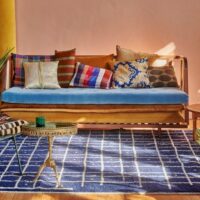
During that period, not only the walls but also the furniture was adorned with woven art. For example, every member of a guild, or someone serving on the city council or as mayor, had their own cushion. These gentlemen were thus literally sitting on the plush. However, the wealth of the carpet industry’s elite clientele often had a downside, which the exhibition also explores. The museum also draws a connection to the present. In a special art project, designer Mina Abouzahra is collaborating with contemporary “guilds” to design their own cushions, featuring unique symbols based on Amazigh iconography—the cultural background of one in ten residents of Gouda today. The cushions are woven in Morocco using techniques that differ little from those of centuries ago, and they are also featured in the exhibition.
Audio Tour
An audio tour accompanies the exhibition, in which curator Ingmar Reesing highlights details that are easy to overlook.
Publication
Museum Gouda is producing a small illustrated publication in-house to accompany this exhibition.
Public Program
Museum Gouda is organizing an extensivepublic program around “Wonder Walls,” ranging from an in-person “yap & yarn” evening to workshops where visitors can get creative with textiles. Up-to-date information about the program can be found on the museum’s website.
Detail of Landscape Vegetation, Workshop of Jannetje Wouters, 1692–1694, City of Gouda, Gouda
Loom, Artist unknown, 20th century, Royal Manufactory De Wit, Mechelen