Gouda is steeped in history—history that you can still enjoy today. Here are 14 tips to help you immerse yourself in Gouda’s past and stories that will take you on a journey through the medieval streets of yesteryear. A list of iconic landmarks, ranging from characteristic courtyards and churches to world-renowned locks and vibrant heritage sites that have been given new life.
St. John’s Church
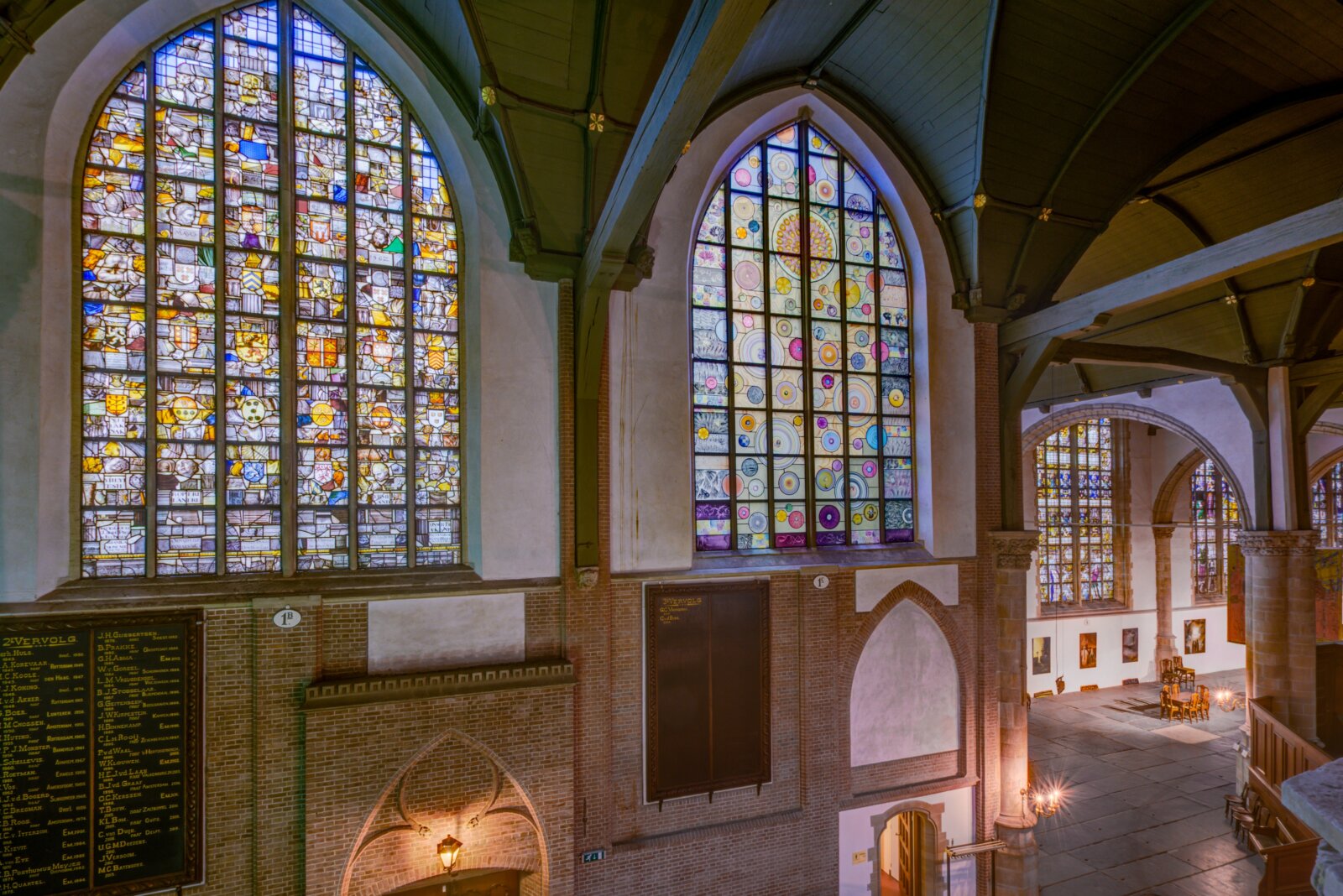
If walls could talk, the stories within St. John’s Church would come tumbling out. The cruciform church, dating from 1278, has been rebuilt several times and, at 123 meters, is the longest church in the Netherlands. The 72 stained-glass windows by the Crabeth brothers, known as the “Gouda Glasses,” are unique in the world. The windows depict biblical and historical stories, and no fewer than 61 of them were created between 1530 and 1601. They even survived two Iconoclastic Movements. The original design drawings—canons—have been preserved and are stored in a climate-controlled vault. Laid end to end, the canons stretch over two kilometers, earning the church a spot in the Guinness World Records. An audio tour, included in the admission price, reveals these hidden treasures. There’s also a children’s tour, and the church boasts impeccable acoustics. A concert at St. John’s Church is therefore an absolute must.
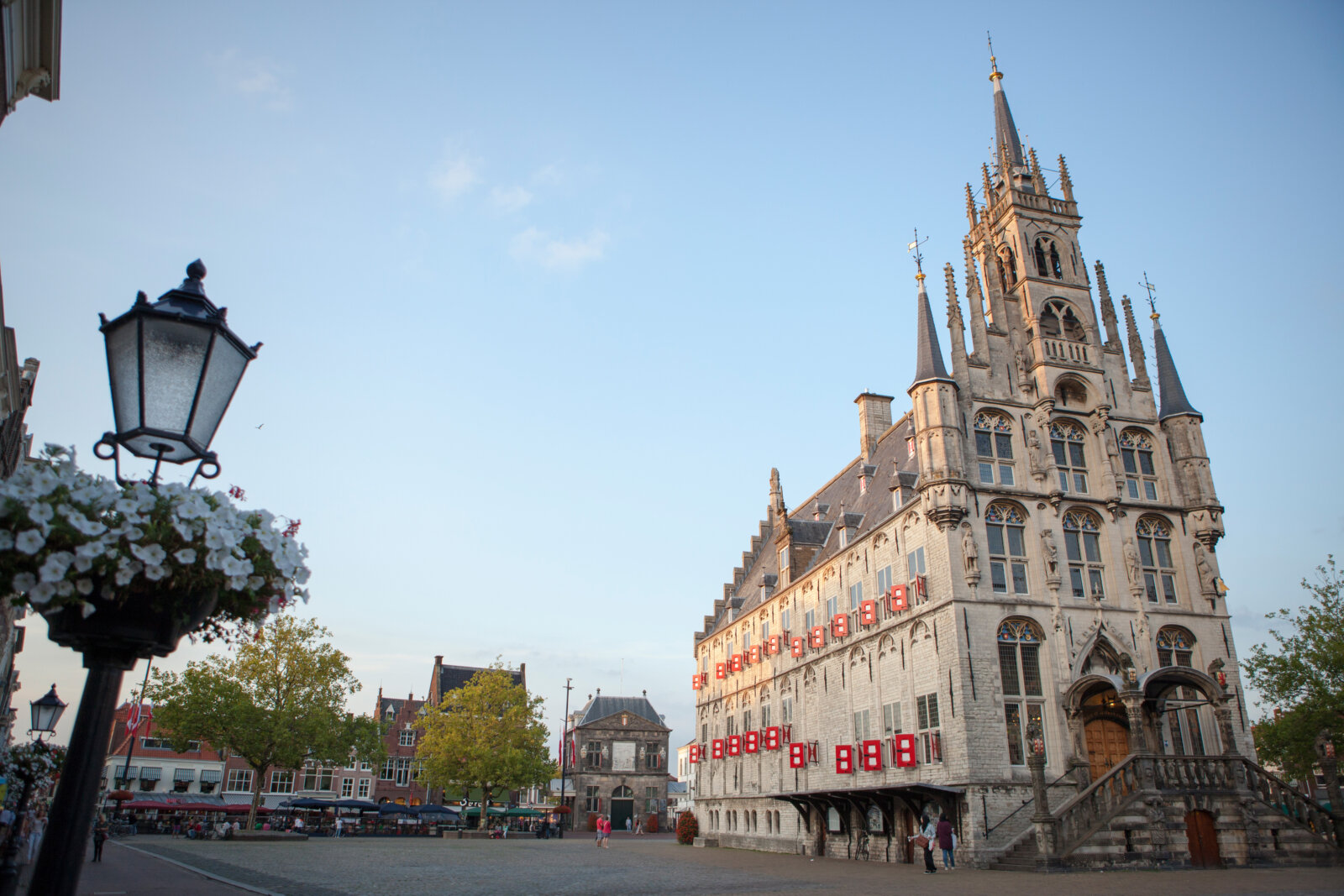
The Old City Hall of Gouda
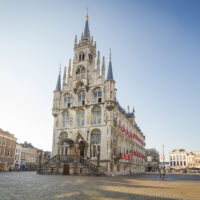
The Old City Hall of Gouda is without a doubt Gouda’s most photographed monument. Its distinctive red shutters, natural stone facade, carillon, statues of important figures from Gouda’s history, and the chimes are real eye-catchers. In the summer of 1438, the city hall was severely damaged by a city fire. In 1448, it was rebuilt in the Late Gothic style. The interior dates from the 17th and 18th centuries, and the 400-year-old tapestry in the Wedding Hall is a thing of great beauty. The town hall will be closed for renovations until the summer of 2027. After that, it will reopen in all its glory to the public and to anyone wishing to get married at a historic location.
The Gouda Waag
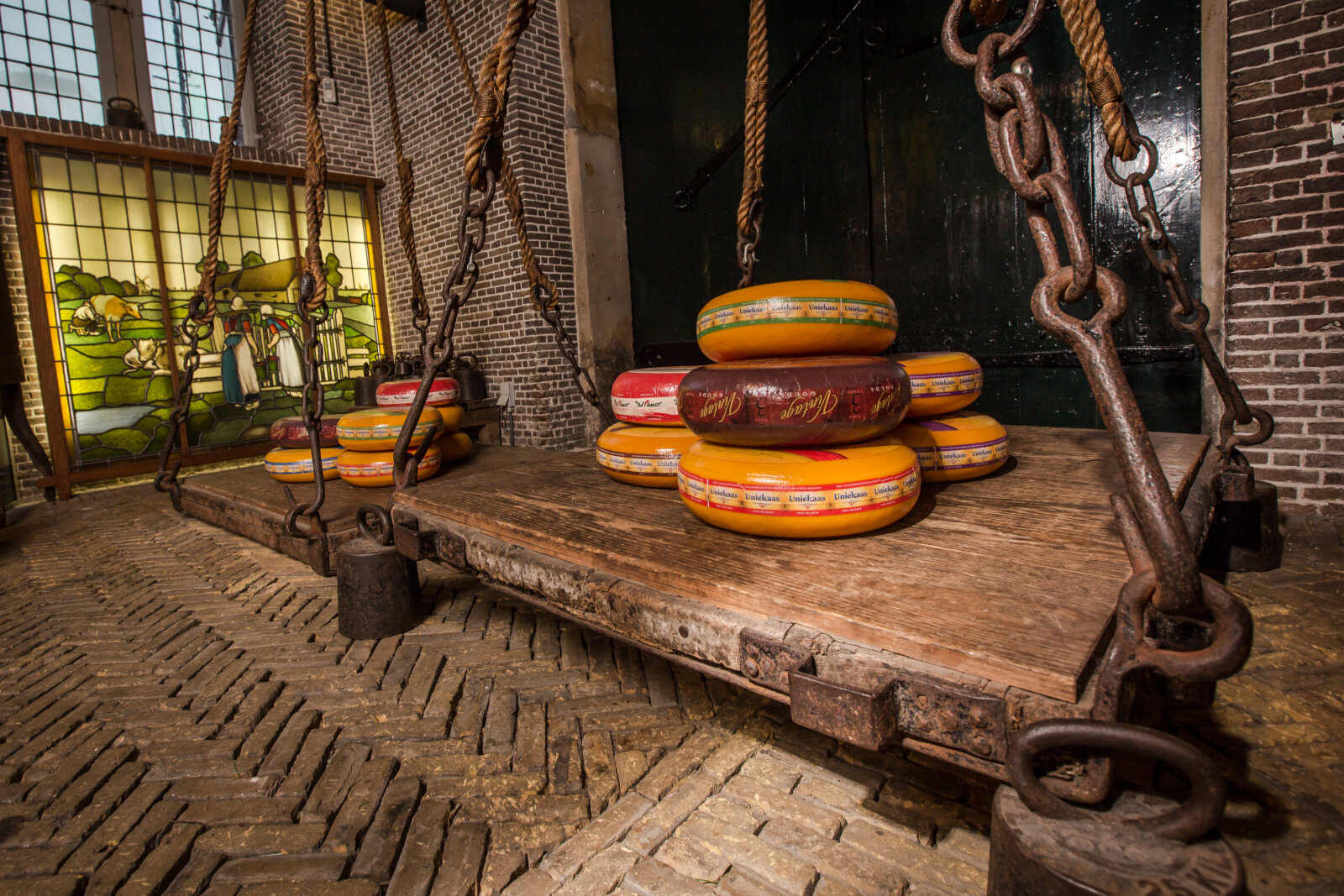
The Gouda Waag on the Markt is an iconic national monument dating from 1668, designed by master builder Pieter Post, who also designed Huis ten Bosch in The Hague and De Waag in Leiden. Years ago, all goods weighing more than 10 pounds were weighed in this building so that taxes could be levied on them. The large relief on the facade commemorates this, and the original scales can be admired inside. Today, it is a museum dedicated to Gouda’s trading history and “Made in Gouda” products, such as cheese, which you can also purchase there. The audio tour tells you more about the history, including the story behind “Niet te hoogh niet te laeg, van passe,” a phrase inscribed on the facade of Foodbar de Zalm. When the building was rebuilt, it was not allowed to be taller than the Waag because it was a prestige project of the municipal government at the time. For the best tips on Gouda, head to the VVV Gouda tourist office on the ground floor!
Museum Gouda & the Catharina Gasthuis
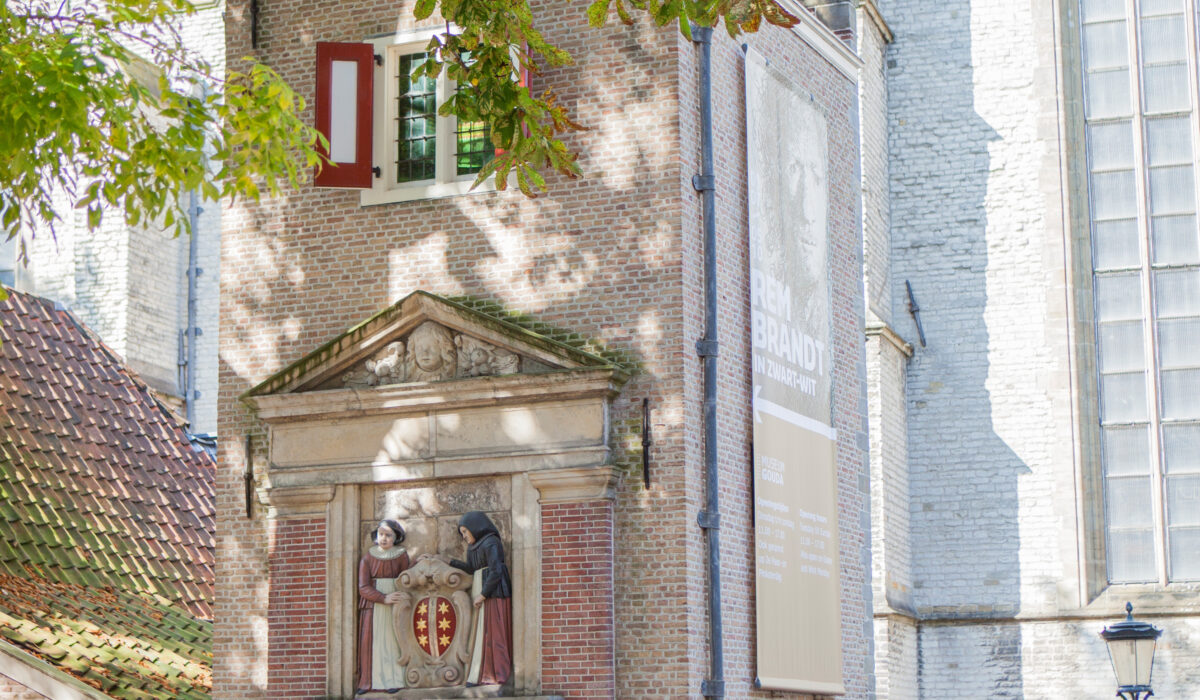
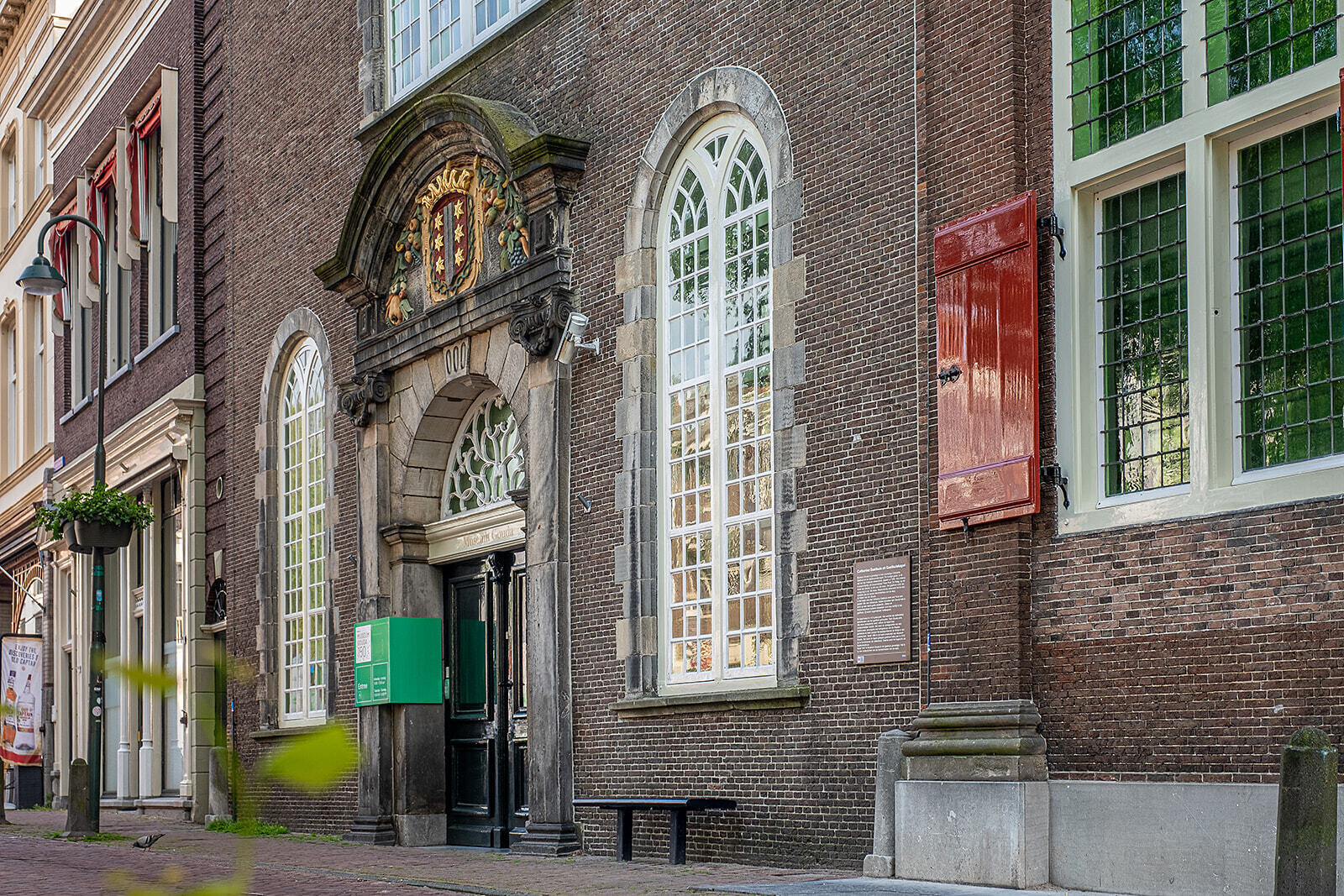
Since 1947, the art treasures of Museum Gouda have been housed in the 15th-century Catharina Gasthuis. It was once a refuge for travelers, the sick, and the poor. In this most beautiful part of Gouda, you’ll feel as if you’ve stepped back in time to the Middle Ages—especially when you walk through the stunning Lazarus Gate and find yourself in the lovely museum garden. Inside the museum, the city’s history comes to life, with altarpieces, a permanent collection of Gouda pottery in the pottery attic, and an interactive city model depicting Gouda as it was in 1568. In addition, there are current, high-profile exhibitions.
St.Agnieten Chapel
The St.Agnieten Chapel on the Nieuwe Markt is a medieval chapel. What remains today is the remnant of the St. Agnieten Convent from 1450, a women’s monastery. At that time, it served as a workshop for carpet weavers; remnants of the dye vats are now visible in the pavement. The Pawnshop also used this historic building between 1650 and 1924. Today, the chapel serves a cultural purpose and hosts events such as concerts.
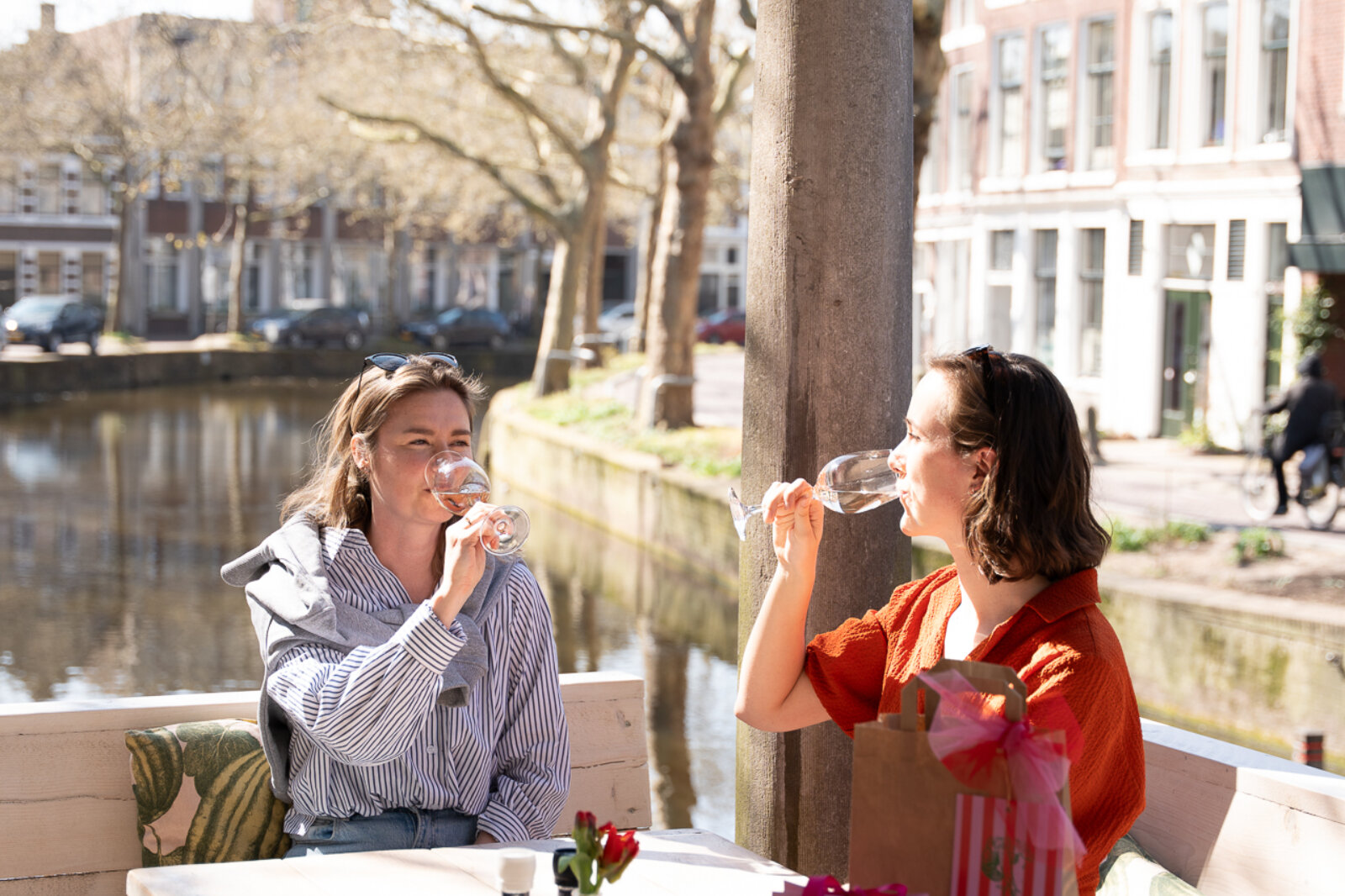
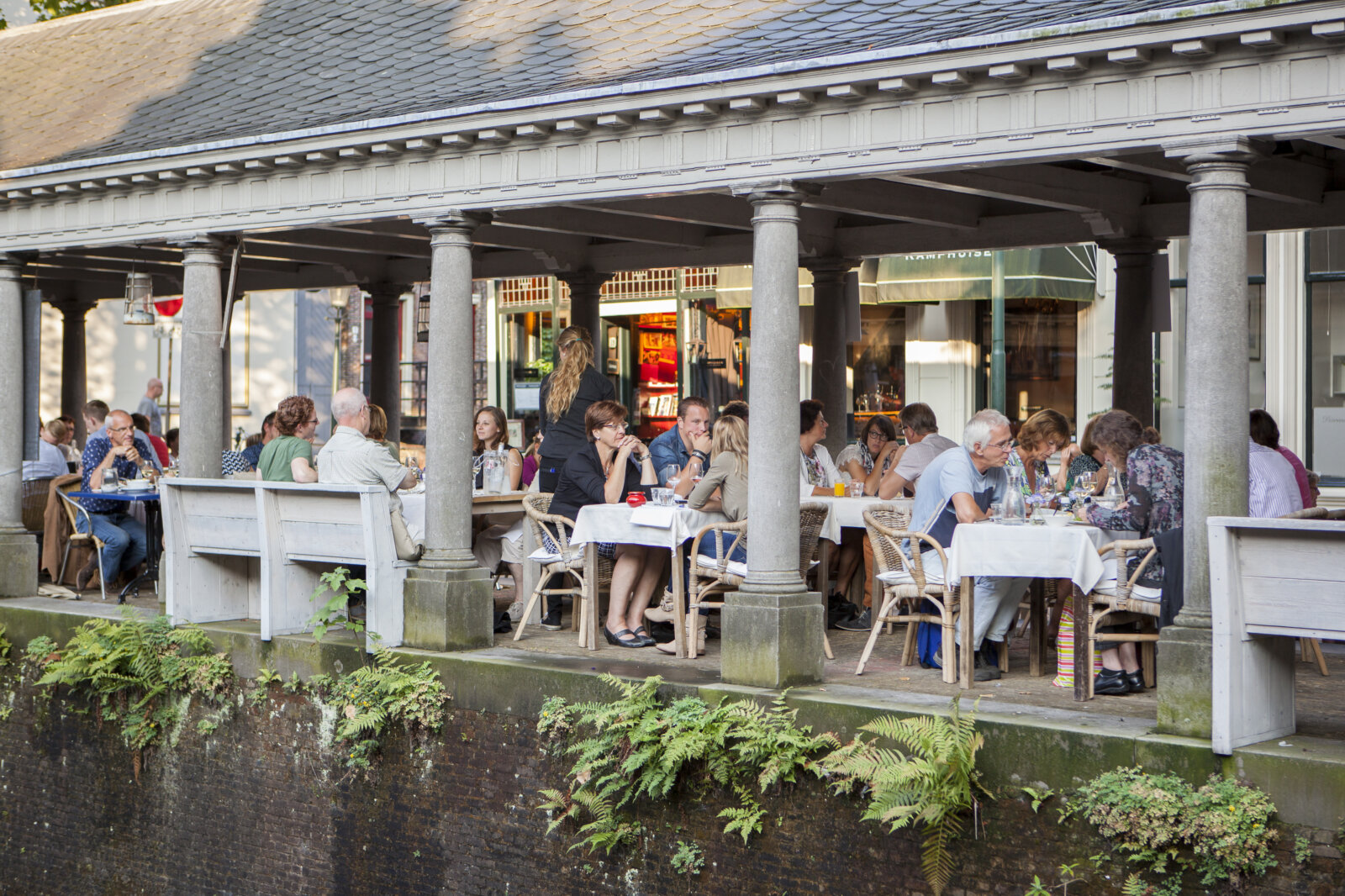
Fish Markets Fish comes at a high price! As early as the 15th century, Gouda had a fish market where caught fish were traded. The fish market on the Lage Gouwe was for Gouda’s fish merchants, while the one on the Hoge Gouwe—also known as the “Vreemden Vismarkt” (Foreigners’ Fish Market)—was for merchants from outside the city. The current fish markets date back to 1588 and are a historic site where Restaurant Brunel and Kamphuisen Eet & Drinklokaal have set up their outdoor seating areas. The adjacent 18th-century bridge keeper’s house (also known as the “commissarishuisje”), originally intended for inspectors, has been converted into an exhibition space for the De Firma Gouda art center.
Donkere Sluis (near the Visbanken)
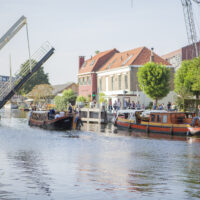
The Donkere Sluis is one of the Netherlands’ oldest locks, built around 1250, and a hydraulic engineering monument. Following the construction of a second lock—the Amsterdams Verlaat—and the Havensluis on the Hollandsche IJssel, it became the longest lock chamber in the world at the time. With a length of nearly 800 meters, it remains crucial for inland shipping between Amsterdam and Rotterdam. It has been designated a hydraulic engineering monument since 1954.
Gouda’s Metaheerhuis
In 1899, a Metaheerhuis was built behind the Jewish retirement home on Oosthaven. This national monument, with its yellow brickwork, was a place where the deceased were washed and prepared for burial. Today, it serves as a memorial to the Jews of Gouda who were murdered during World War II. The Metaheerhuis Foundation maintains the building, welcomes visitors, installs Stolpersteine, and organizes guided tours.
Gouwekerk
Its official name is St. Joseph’s Church, but because of its location on the Hoge Gouwe, this red-brick church came to be known asthe Gouwekerk. The 80-meter-high tower is a striking landmark in the city. The last Mass was celebrated there in 1972, and in 2024, following a renovation, it was repurposed as a multifunctional space. Today, it is a vibrant venue for concerts, events, church services, gatherings, and exhibitions.
Willem Vroesenhuis Courtyard
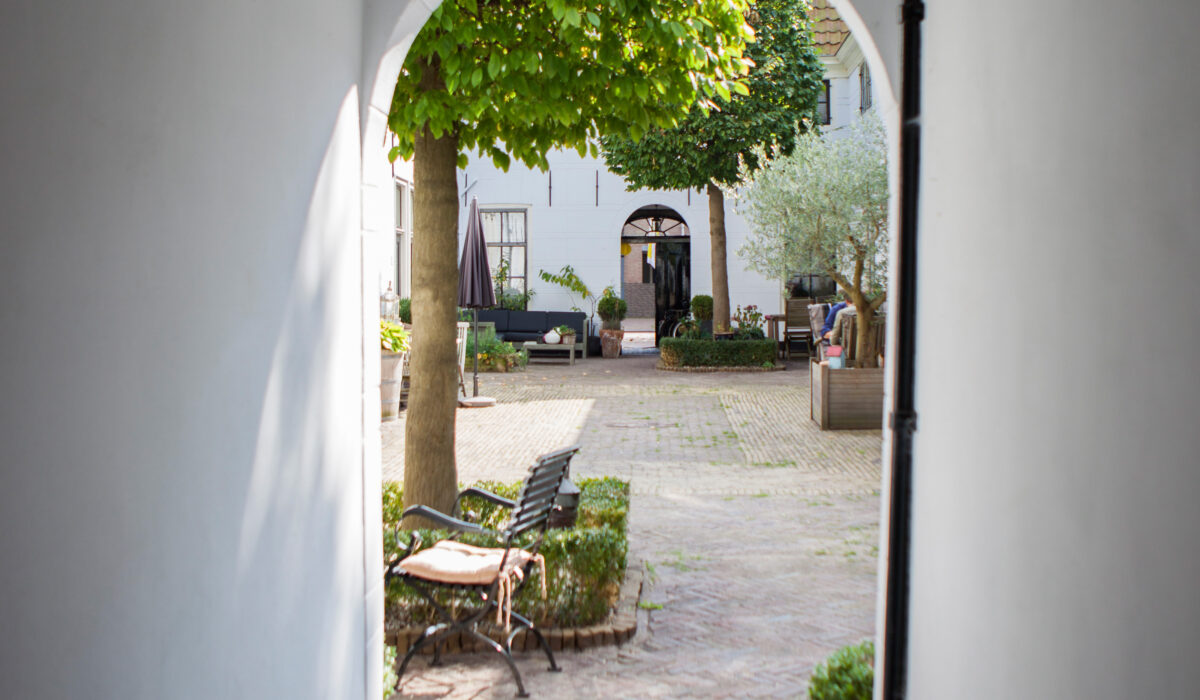
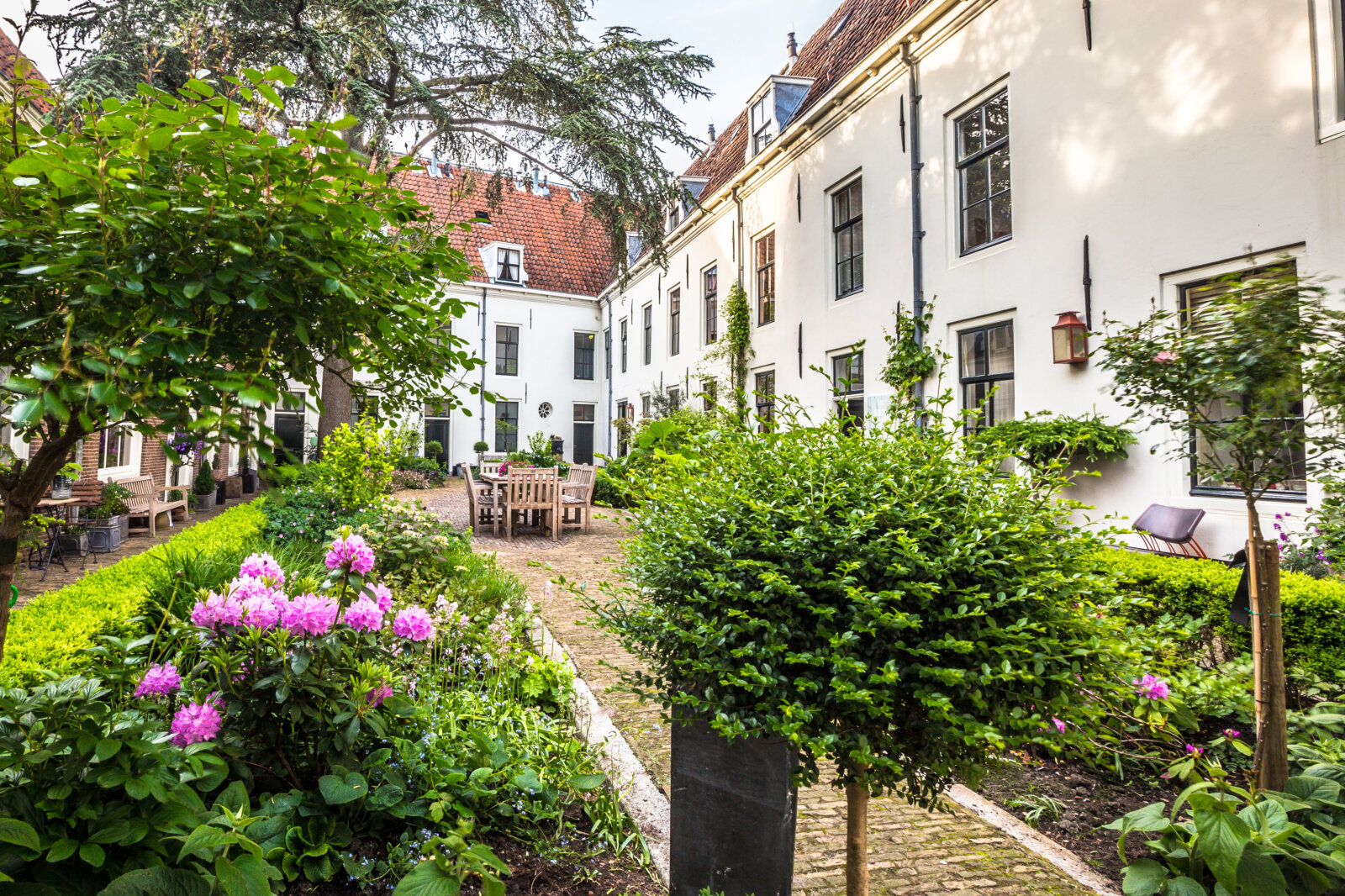
As soon as you open the side gate on Spieringstraat leading into the Willem Vroesenhuis Courtyard, you’ll feel as if you’ve stepped back in time. In this courtyard, dating from 1555, stands the Willem Vroesenhuis, which at the time served as a home for poor, elderly men, founded by Willem Willemszoon Vroesen. To be eligible to live there, one had to be a citizen of the city, unmarried, no older than 50, of good character and reputation, free of debt, and not a troublemaker. It wasn’t until 1977 that the last resident left the historic building. A few years later, the complex was divided into eighteen residential units. It is accessible with a guide, when the door is open, or during Open Monument Days.
Hofje van Cinq
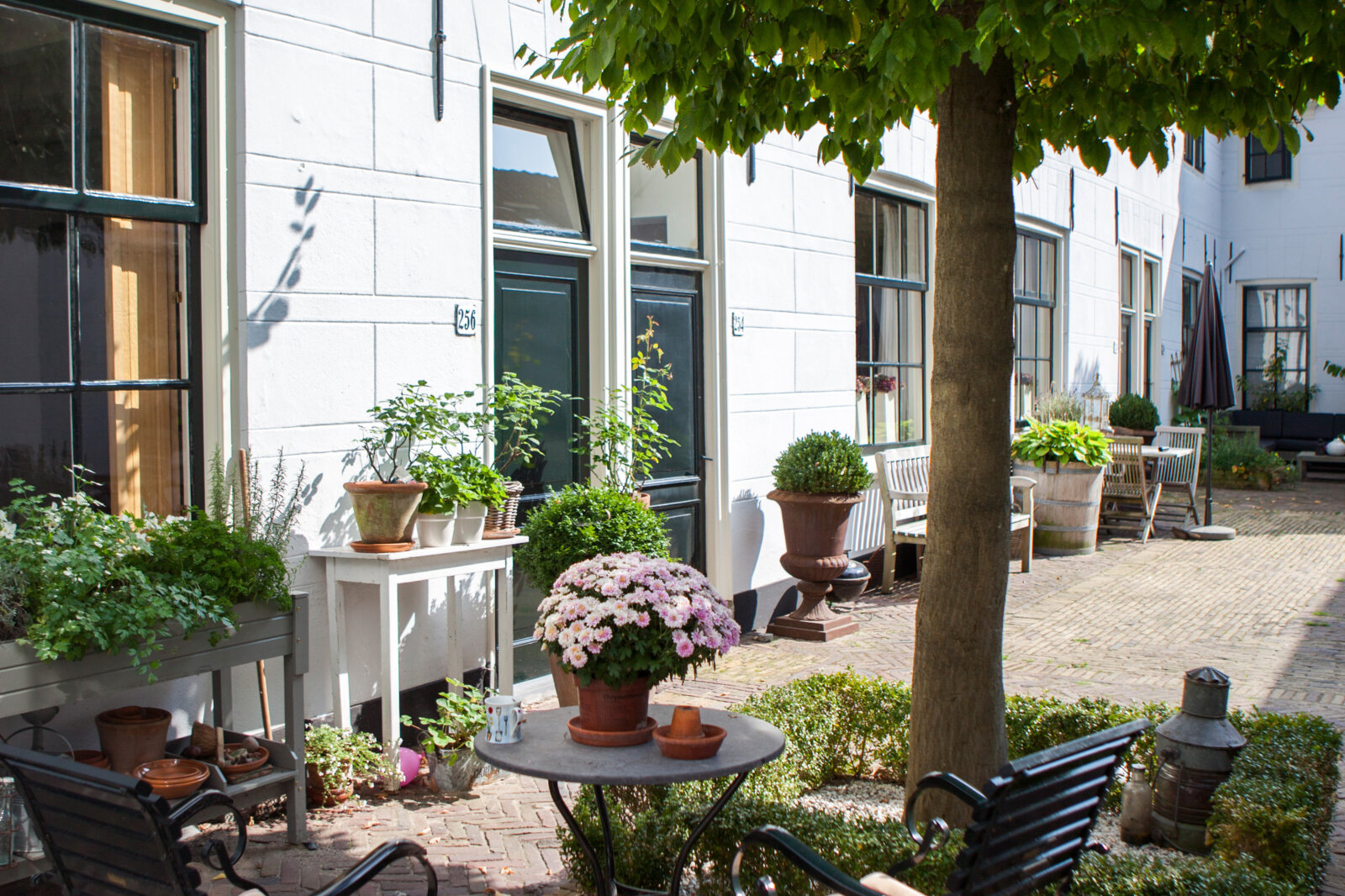
The Hofje van Cincq is a national historic monument dating from 1700, founded as a charitable almshouse by Cornelis Cincq. Through his estate, he sought to provide housing for the elderly poor. This led to the construction of twelve dwellings, with the regents’ chamber located above the entrance gate. It has been preserved in its entirety and is currently occupied by private residents.
The Four Crowned Martyrs
Stop for a moment at number 6 on Naaierstraat to see the beautiful, late-Gothic house featuring the Four Crowned Martyrs, a richly carved frieze on the facade. It showcases the work of masons and stonecutters and pays homage to“The Four Crowned Martyrs,”four martyrs from the 4th century who refused to build an idol for Emperor Diocletian. They paid for this with their lives and were dumped into a river in lead coffins. Thus, they became the patron saints of construction workers.
Jerusalem Chapel
In the historic heart of Gouda stands the Jerusalem Chapel, a monument whose history dates back to around 1500. This twelve-sided chapel, inspired by the Church of the Holy Sepulcher in Jerusalem, was built by the Gouda pilgrim Gijsbert Willemsz Raet as a memento of his journey to the Holy Land. Over the centuries, the chapel served as a place of worship and a gathering spot for art, music, and culture. Today, this national monument hosts exhibitions and meetings, and you can get married there through Relais & Châteaux Weeshuis Gouda.
Remonstrant Gate & Tree Cathedral, Gouda
A serene spot near the Remonstrant Gate on Keizerstraat. This courtyard in Gouda is the only remnant of the Remonstrant church that stood here until the 1980s. It is a secluded, green space that serves as a “tree cathedral” and exudes the rich history of free thinkers in Gouda. In the spring and summer, it’s a beautiful spot for taking photos.
Take a stroll through Gouda’s history
Discover Gouda with the Gouda Guides Guild and reserve a spot on a guided walking tour. For example, the “Historic Gouda” walk during the cheese market on Thursdays between April and September. Or pick up the booklet “Exploring Historic Gouda,” written by the guides, at the Gouda Tourist Information Office (VVV Gouda), which features all of the guides’ favorite spots. Another option is to wander through Gouda’s alleys with the book *The 25 Alleys Walk* in hand. The alleys are named after trades from the past, such as knife makers (Messenmakersteeg), leather tanners (Leerlooierspoort), and fishmongers (Vissteeg). A guidebook for the alleys walk is also available for purchase at VVV Gouda.
Finally, you'll find fun, historical themed walks on ExploreGouda.nl
More on " Walking in Gouda " in the Gouda Calendar