On Saturday, March 8, International Women’s Day, Museum Gouda will open “Ongehoord – Verzamelde vrouwen” (Unheard – Women Collected). The exhibition offers a glimpse into Dutch history through the eyes of more than thirty women, from Countess Jacoba of Bavaria to midwife Anna van Hensbeek, and from artist Charley Toorop to Rkia Majourhate of Gouda. Through these personal stories, the exhibition sheds light on the position of women over the past six hundred years. Waves of emancipation have repeatedly led to conservative backlash—there is nothing new under the sun. Even in the past, women played an indispensable role in society.
In 2024, curator Jorien Soepboer conducted research on more than thirty women in the collection of Museum Gouda. Artists, subjects of portraits, and historical figures were given names—or, conversely, lost them due to a lack of documentation. Together, these women paint a picture of “the other half” of our country’s history. Historian Femke Deen, editor of the book Moeders des Vaderlands, places the women portrayed in their historical context. Legally speaking, women were considered inferior to men for centuries—it wasn’t until 1956 that the Law on Legal Incapacity was abolished, allowing married women to work, open a bank account, and travel without permission. But even though formal equality was often hard to find, laws and rules do not always align with reality. Women filled crucial roles in society, despite their structural exclusion from many areas of public and professional life.
Breaking the Mold in a Man’s World
In the sixteenth century, the ideal image was that of a modest and caring woman who managed the household. But a woman like Lydia van Rijswijk (1525–1602) actively involved herself in her family’s financial affairs and personally initiated several lawsuits. Artist Cornelia de Rijk (1653–1726) was a successful painter of birds and landscapes, compared in her own time to d’Hondecoeter. After her husband’s death, she became the family’s breadwinner, ran a paint shop, and supplemented her income from commissions by giving painting lessons. Women in all strata of society enjoyed considerable independence in the early modern period, but they left few tangible traces behind. In the archives, most women are referred to only as the wife, mother, or daughter of a man.
Women’s Work
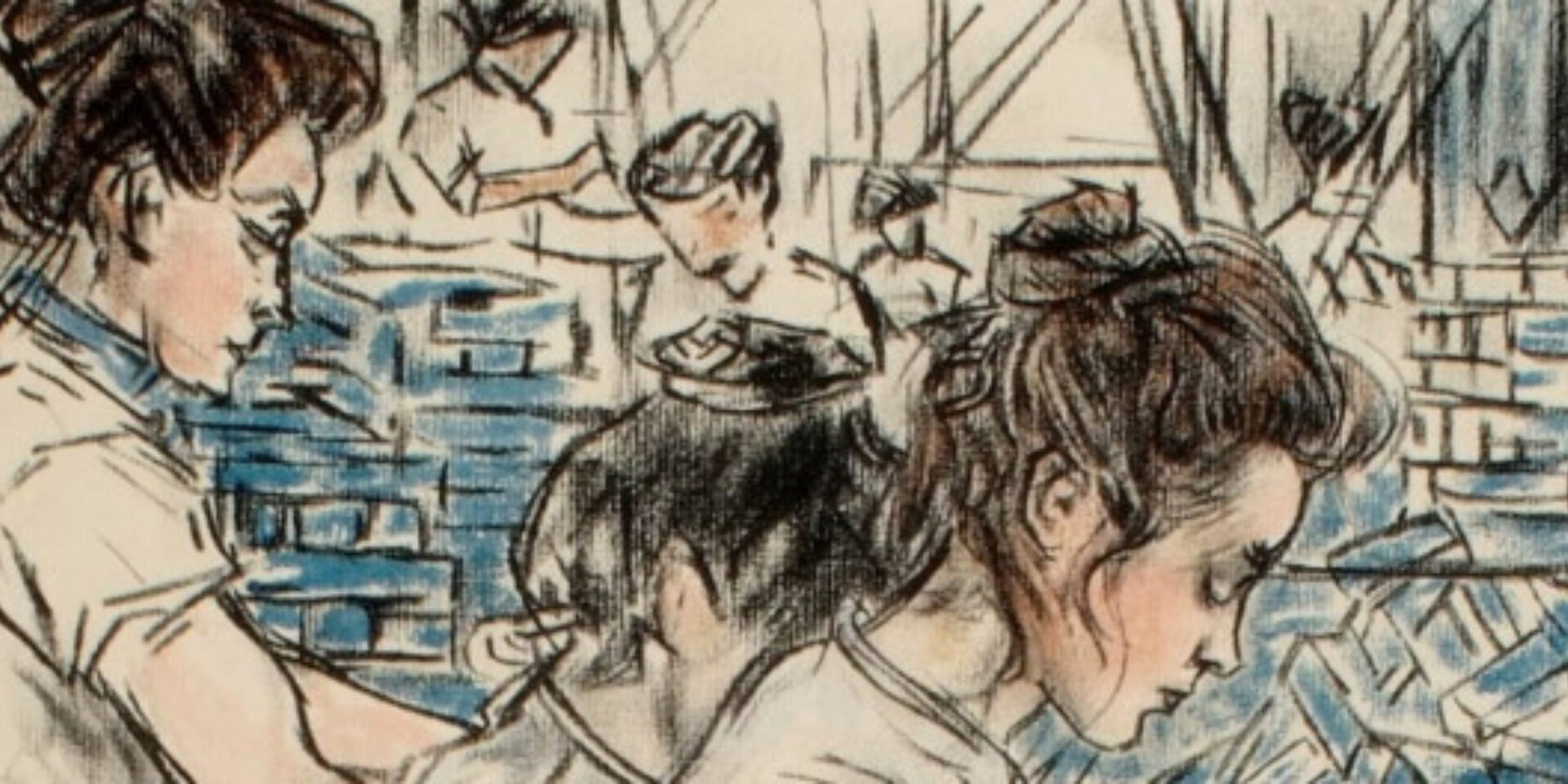
In the wake of the French Revolution of 1789 and the Enlightenment, women temporarily gained more freedom, but the 19th century saw a conservative backlash, and women were emphatically relegated to the domestic sphere. Crafts that women had practiced for centuries became taboo, and poor working-class women who had to work earned far less than men, such as the candlemakers captured by Jan Toorop in 1905. This inequality led to the first true women’s rights movement in the late 19th century. The National Exhibition for Women’s Labor provided a platform for female talent, such as glass engraver Johanna Breebaart. Women were admitted to art schools at home and abroad, and won prizes and scholarships, such as painter Barbara van Houten (1862–1950). In 1919, the movement’s primary goal became a reality: women’s suffrage.
Waves ofEmancipation
Between the two world wars, a new era seemed to have dawned, with women making inroads into politics, science, music, and literature. The sisters Constance and Péronne Arntzenius, frequently depicted in their youth by the painter Tholen, fearlessly exercised their freedoms. Starting in the 1910s, they traveled through the United States, Canada, and Mexico as a sort of backpackers avant la lettre. Along the way, they earned money through their singing, photography, and filmmaking. But in the 1950s, women were once again confined en masse to the ideal image of the demure wife behind the kitchen sink. This led to a second wave of feminism in the late 1960s. Women took to the barricades against inequality and for control over their own bodies. Josine de Bruyn Kops (1940–1987) played a key role as director of Museum Gouda; she was the first to implement a feminist policy and acquire works by female artists.
Role Models
As recently as 1971, the law still stated that the man was the head of the family and that a woman owed him obedience. It has only been fifty years since women became legally equal to men—a mere blink of an eye in the grand scheme of history. The hope that emancipation was complete after the second wave of feminism turned out to be premature. New role models remain necessary, such as Rkia Majourhate, a strong Moroccan-Gouda woman, captured by photographer Khalid Amakran. History shows that emancipation repeatedly provokes a backlash; it is a constant ebb and flow. The recent global rollback of abortion laws and the rise of the new housewives, the “tradwives,” illustrate the fragility of our current achievements.
The research on the women in the Museum Gouda collection was made possible by the Curators’ Grant from the Cultural Fund.