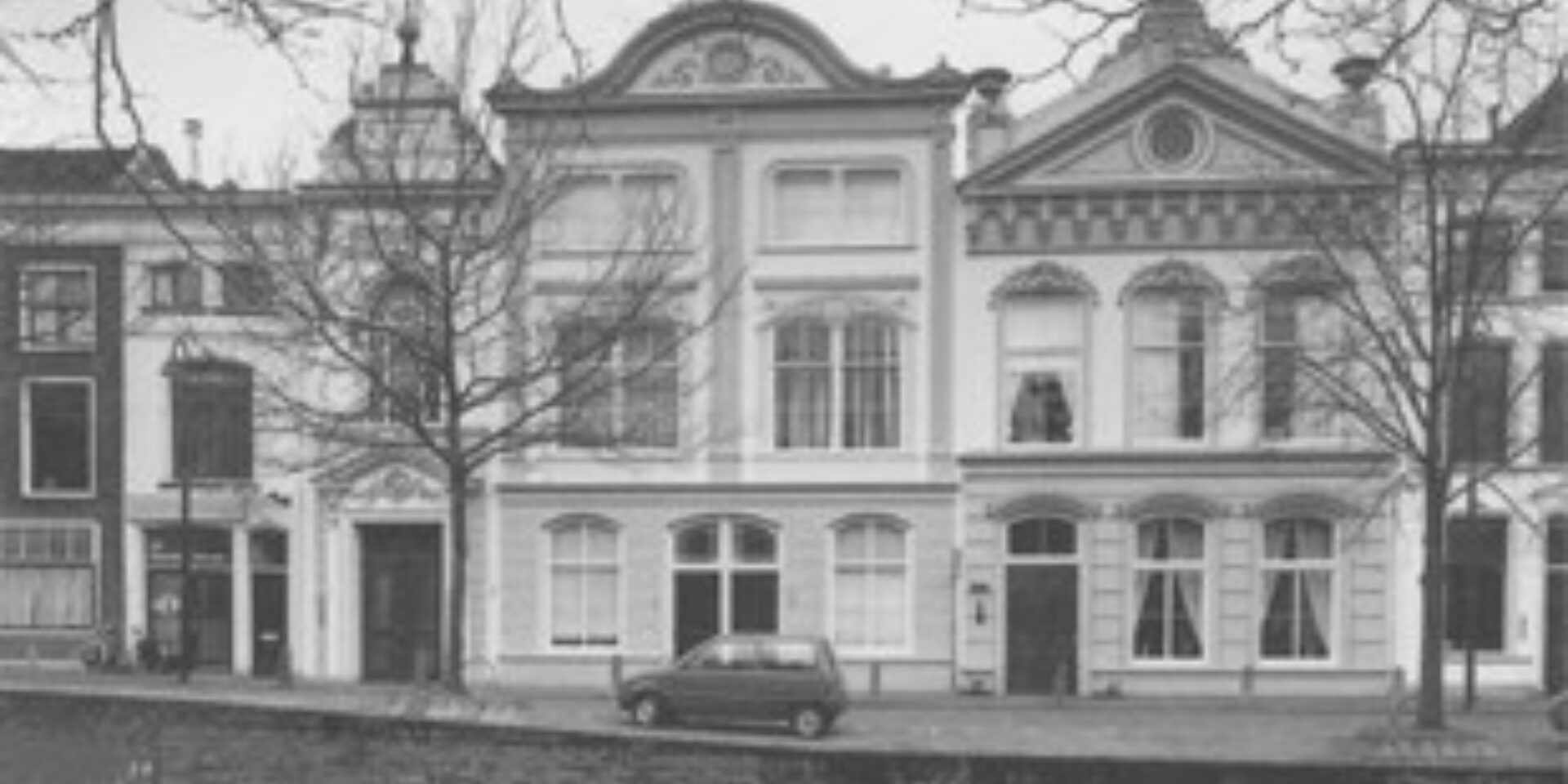
As long as the complex served as a clandestine church, it was necessarily hidden behind a row of houses. Traces of the first church hall that was set up there can still be found in the roof of the current rectory. This was followed by the purchase of two small houses at the rear (de Raam) and, in 1632, two more at Hoge Gouwe 111. A new church hall was built in the garden behind these houses that same year.
The church building was constructed in 1352 by a wealthy merchant from Gouda. It was purchased in 1630 by Suitbertus Purmerent and converted into a place of worship where his brother, Father Petrus Purmerent, presided over services. At that time, the government did not allow Catholics to have church buildings. That is why they are also referred to as “house churches” or “hidden churches.” The building at Hoge Gouwe 107 is the only remaining Catholic clandestine church in Gouda from that era that has continued to be used for worship. The reason for this is that the Catholics who worship here sided with the Roman Catholic Church “of the old episcopal clergy” during the schism of 1723. This is the branch of the Roman Catholic Church that, in defiance of the Pope and the Congregation for the Doctrine of the Faith, held fast to the ancient rights of the local church (the people together with their bishop) and to the legitimate authority of their own bishop, which is not subordinate to the authority of the Bishop of Rome. Thanks to this self-assured attitude and personal responsibility of Catholics, the Old Catholic Church came into being: with the unique combination of—according to Roman Catholic tradition—valid ministries and sacraments, as well as a spirit of solidarity toward culture and science. In accordance with Catholic doctrine and the tradition of the Church, it has, as a Church, exercised its right to set policies in matters that do not affect the essence of the ministry or the sacraments. A consequence of this policy is that pastors may marry, women may become deacons, priests, or bishops, and gay people, just like anyone else who has been baptized, are invited to receive communion.